

The real choice isn’t AI versus humans. It’s using both where they deliver the most value together.
If your multilingual content runs through AI only, you’re spending cents.
Add full human verification across every word and the bill can double or even triple.
Most organizations land somewhere in the middle. They identify the content that carries risk and let the rest move through automatically.
Leaders usually ask a straightforward question when they consider AI for multilingual content:
The gap is still dramatic. Processing 1,000 words with a compact AI model costs less than a dollar. Putting the same volume through human linguists can cost thousands.
The way you balance the two determines your long-term efficiency and quality.
Generative models charge per token. A simple rule helps with math. One token is roughly four characters, or about three-quarters of a word.
Current published API prices include:
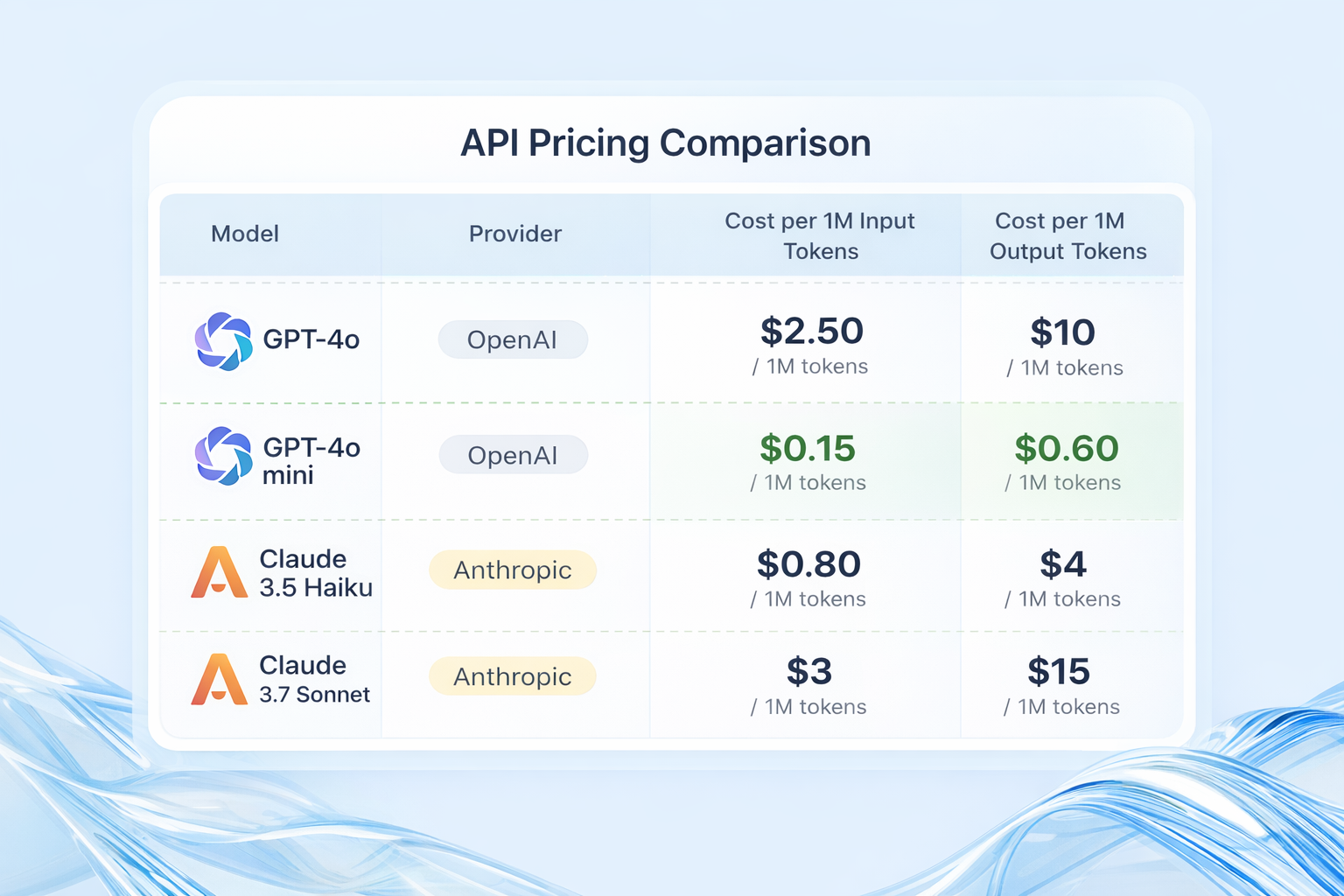
Converting 100,000 words (around 133,333 input tokens and the same for output):

Back-of-the-envelope maths from the token rule above; your exact mix varies by prompt size and output length.
But the conclusion stays the same: AI is incredibly affordable at scale.

Full human verification aligns with ISO 18587, the international standard for full, human post-editing of machine output – a defined process and competency bar, not a casual “quick proof”.
Rates are typically quoted per word and vary by domain, language pair and service level. Publicly available guides and industry discussions put MT post-editing and proofreading in broad ranges such as $0.03–$0.06 per word for general material, with regulated or creative content higher and some vendors quoting wider spans.
Apply that to the same 100,000-word project:
That’s a cost ratio on the order of ~7,500× to 15,000× for this volume (and ~900× to 1,800× if you choose a larger model like GPT-4o).
The exact multiplier matters less than the truth behind it.
Humans are orders of magnitude more expensive when applied to every word.
Quality-estimation (QE) means you don’t need to identify everything.
Modern QE models score each segment and flag only those likely to contain errors – a technique researched and benchmarked for years (see WMT’s Quality Estimation shared task and recent findings on LLM-based QE).
With QE-gated workflows you might verify 10–30% of segments while letting the rest flow straight through. Using the earlier $0.04/word mid-point:
Teams that measure quality gain the confidence to route only high-risk segments to linguists. The rest flows straight through.
The workflow is simple.
Teams adopting this model typically verify 10–30% of their content instead of 100%. Add up the numbers on any large project and you’ll see why finance teams like the approach.
You keep quality where it matters and remove unnecessary cost from everywhere else.
Do this consistently and you’ll ship faster, spend less, and stay confident that the right eyes were on the right words.
Most teams no longer buy human verification and AI separately.
Modern platforms like Straker Verify package the workflow across three tiers: Free, Professional, and Enterprise, each designed for different levels of complexity.
This pricing structure supports the hybrid model described above — letting AI handle the routine work and bringing in human expertise only when it adds real value.
This isn’t a decision between humans and machines. It’s a decision about where each one delivers the most value.
Let AI carry the routine load at cents on the dollar.
Reserve human judgment for the moments that shape trust, revenue, and regulation.
Use quality signals to guide where you invest.
Do that consistently and you’ll publish faster, spend less, and protect your brand across every market you operate in.